B1 · Intermediate
18 min
politicseuropeelectionsgermany
Alemania gira a la derecha: elecciones en Renania-Palatinado
Germany Shifts Right: The Rhineland-Palatinate Election
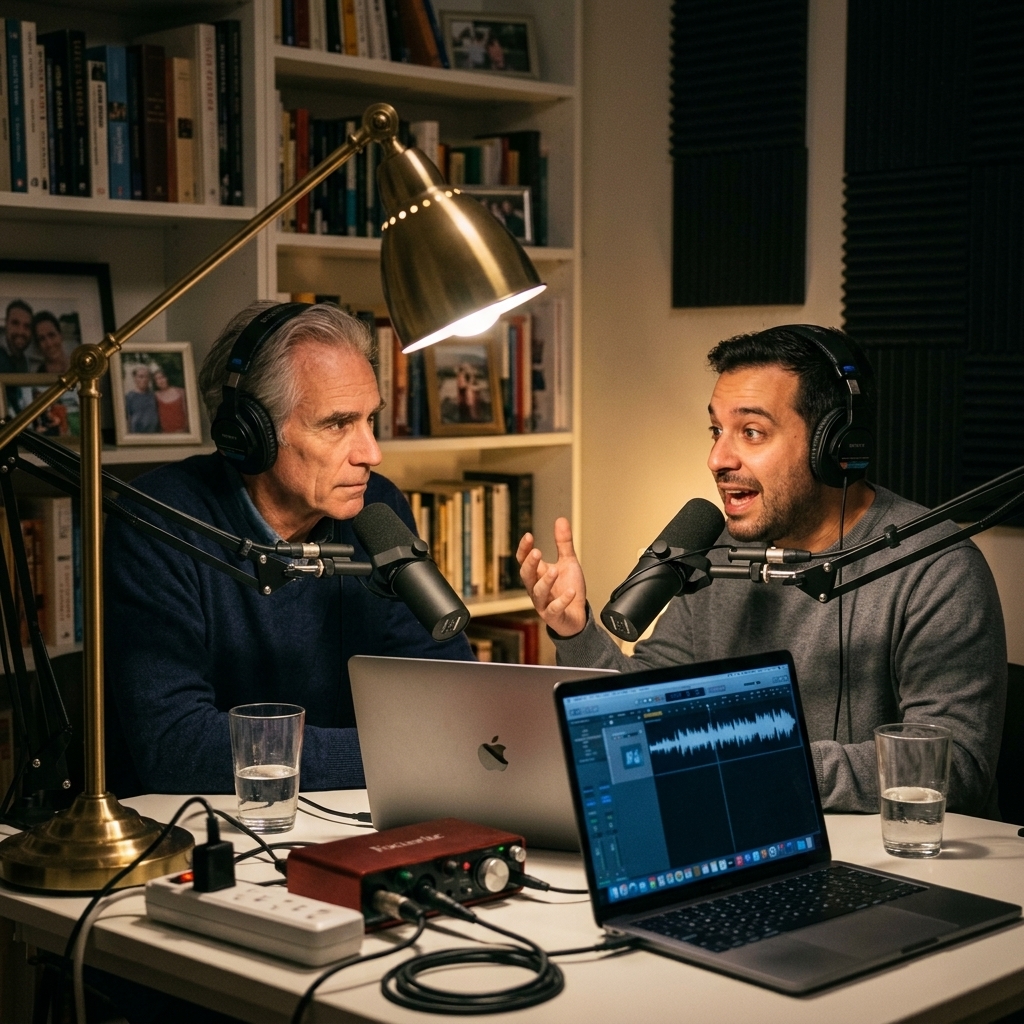
Fletcher breaks down this story in English. Octavio reacts and expands in Spanish. Follow along with the live transcript, tap any word for its translation. Intermediate level — perfect for intermediate learners expanding their range.


Well, look.
Something happened in Germany this weekend that I think deserves more attention than it's getting.
Sí, las elecciones en Renania-Palatinado.
Yes, the elections in Rhineland-Palatinate.
Es un resultado muy importante.
It's a very important result.
Right, so here's the thing.
The Social Democrats, the SPD, they've dominated this state for over thirty years.
Since 1991.
And now, for the first time, they've dropped to second place.
Exacto.
Exactly.
La CDU, los democristianos, ahora tiene más escaños en el parlamento regional.
The CDU, the Christian Democrats, now has the most seats in the regional parliament.
Y Alternativa para Alemania está en tercer lugar.
And Alternative for Germany is in third place.
So Octavio is laying out the basics.
The Christian Democrats are now the biggest party in the state parliament, and the far-right Alternative for Germany, the AfD, has moved up to third.
That's a pretty dramatic shift.
Bueno, mira, para entender esto, necesitas conocer un poco la historia de este estado.
Well, look, to understand this, you need to know a bit of the history of this state.
Renania-Palatinado fue territorio del SPD durante mucho tiempo.
Rhineland-Palatinate was SPD territory for a long time.
And when you say SPD territory, we're talking about the party of Helmut Kohl's rivals.
The center-left.
The working people's party, historically.
Sí, pero es interesante porque Renania-Palatinado también fue el estado de Helmut Kohl.
Yes, but it's interesting because Rhineland-Palatinate was also Helmut Kohl's state.
Él era de Ludwigshafen.
He was from Ludwigshafen.
La CDU era muy fuerte allí antes de 1991.
The CDU was very strong there before 1991.
Oh, that's a good point.
So this is actually the CDU reclaiming old ground in some ways.
Es que sí y no.
Well, yes and no.
La CDU de hoy es diferente de la CDU de Kohl.
Today's CDU is different from Kohl's CDU.
Y el contexto es completamente diferente.
And the context is completely different.
Ahora Friedrich Merz es canciller, y su partido es más conservador que antes.
Now Friedrich Merz is chancellor, and his party is more conservative than before.
So Octavio is making an important distinction.
Yes, the CDU used to own this state.
But the CDU of 2026 under Merz is not the CDU of the nineties under Kohl.
It's shifted rightward.
Y la pregunta es: ¿por qué el SPD perdió después de tanto tiempo?
And the question is: why did the SPD lose after so long?
A ver, hay muchas razones.
Let's see, there are many reasons.
Well, I mean, Malu Dreyer was a big part of their success in that state for years.
She was popular.
People liked her personally even when they didn't love the party.
Exacto.
Exactly.
Y antes de Dreyer, estaba Kurt Beck.
And before Dreyer, there was Kurt Beck.
El SPD siempre tenía líderes regionales fuertes.
The SPD always had strong regional leaders.
Personas que la gente conocía y respetaba en la región.
People who the population knew and respected in the region.
Right, and that's something Americans don't always understand about German politics.
State elections there are really personal.
People vote for the person as much as the party.
Sí, pero también hay una tendencia más grande.
Yes, but there's also a bigger trend.
Mira lo que pasó en Sajonia, en Turingia, en Brandeburgo.
Look at what happened in Saxony, in Thuringia, in Brandenburg.
La extrema derecha crece en muchos estados alemanes.
The far right is growing in many German states.
And that's the piece that worries people.
Because those eastern states, you could always say, well, that's the former East Germany, there's a different history there, different economic conditions.
Exacto, Fletcher.
Exactly, Fletcher.
Pero Renania-Palatinado no es el este.
But Rhineland-Palatinate is not the east.
Es el oeste.
It's the west.
Es una región con industria, con buenas universidades.
It's a region with industry, with good universities.
No puedes usar la misma excusa.
You can't use the same excuse.
No, you're absolutely right about that.
When the AfD gains ground in a prosperous western state, that's a different story.
That's not just an eastern protest vote anymore.
La verdad es que la AfD ha cambiado su estrategia.
The truth is that the AfD has changed its strategy.
Antes hablaban solo de inmigración.
Before they only talked about immigration.
Ahora hablan de economía, de energía, de seguridad.
Now they talk about the economy, energy, security.
Temas que preocupan a muchas personas normales.
Topics that worry many normal people.
So Octavio is pointing out something crucial.
The AfD has broadened its message.
It's not just the anti-immigration party anymore.
They're talking bread and butter issues now.
Y eso es más peligroso, en mi opinión.
And that's more dangerous, in my opinion.
Porque cuando un partido extremista habla de cosas normales, parece más normal.
Because when an extremist party talks about normal things, it seems more normal.
Se normaliza.
It becomes normalized.
I covered something similar in France years ago, actually.
When Le Pen, the father, was running, he was clearly extreme.
But Marine Le Pen spent years softening the image.
Same playbook.
Sí, y mira Francia ahora.
Yes, and look at France now.
Las elecciones municipales fueron este mismo fin de semana.
The municipal elections were this very weekend.
La extrema derecha está fuerte en muchos países europeos al mismo tiempo.
The far right is strong in many European countries at the same time.
The extraordinary thing is that this is all happening simultaneously.
France voting, Germany voting, Slovenia voting, Italy having a constitutional referendum.
All on the same weekend.
Bueno, pero cada país tiene su situación.
Well, but each country has its own situation.
No podemos simplificar demasiado.
We can't oversimplify.
En Alemania, la CDU no es extrema.
In Germany, the CDU is not extreme.
La CDU es centro-derecha.
The CDU is center-right.
Fair point.
The main winner here is the CDU, which is a mainstream conservative party.
Merz's party.
The sitting chancellor's party.
That's not the same as the AfD winning.
No, no, espera.
No, no, wait.
Es verdad que la CDU ganó.
It's true that the CDU won.
Pero el problema es que la AfD también creció.
But the problem is that the AfD also grew.
Y cuando la CDU se mueve más a la derecha para competir con la AfD, eso cambia todo el centro político.
And when the CDU moves further right to compete with the AfD, that shifts the entire political center.
And that, I think, is the key insight.
The center itself is moving.
It's not that extremists are winning elections.
It's that mainstream parties are absorbing extreme positions to stay competitive.
Exacto.
Exactly.
En España pasó algo similar con Vox y el Partido Popular.
In Spain something similar happened with Vox and the People's Party.
El PP empezó a usar un lenguaje más duro sobre inmigración porque Vox tenía éxito con ese tema.
The PP started using tougher language on immigration because Vox was successful with that issue.
Right, I remember that.
And then the question becomes: does co-opting the far right's message weaken the far right, or does it just legitimize them?
A ver, esa es la gran pregunta.
Well, that's the big question.
Y la respuesta depende del país.
And the answer depends on the country.
En algunos casos funciona.
In some cases it works.
En otros casos, la gente dice: prefiero el original, no la copia.
In other cases, people say: I prefer the original, not the copy.
I love that phrase.
People prefer the original, not the copy.
That's exactly what happened in some places.
If you adopt the far right's positions, voters just go to the actual far right.
Pero hablemos del SPD un momento.
But let's talk about the SPD for a moment.
Porque este resultado también es un problema para los socialdemócratas en toda Europa, no solo en Alemania.
Because this result is also a problem for social democrats across all of Europe, not just in Germany.
Well, look, the decline of social democracy in Europe is one of the big stories of the last twenty years.
The SPD, the French Socialists, PASOK in Greece.
These were giants.
Sí, y el PSOE en España también tiene problemas, aunque todavía gobierna.
Yes, and the PSOE in Spain also has problems, although it still governs.
La verdad es que los partidos socialdemócratas perdieron la conexión con los trabajadores.
The truth is that social democratic parties lost their connection with workers.
That's the heart of it, isn't it?
The traditional working class doesn't feel represented by these parties anymore.
They feel like the social democrats became the party of university professors.
Es que hay algo de verdad en eso.
There's some truth in that.
Los partidos socialdemócratas se concentraron en temas culturales y olvidaron los problemas económicos básicos.
Social democratic parties focused on cultural issues and forgot basic economic problems.
El trabajo, los salarios, el precio de la vivienda.
Jobs, wages, the price of housing.
And into that gap comes someone like the AfD saying, we care about your energy bill, we care about your job security.
Whether they actually do or not.
Exacto.
Exactly.
Y en Renania-Palatinado hay muchas zonas rurales.
And in Rhineland-Palatinate there are many rural areas.
Ciudades pequeñas donde la gente siente que Berlín no les escucha.
Small towns where people feel that Berlin doesn't listen to them.
Eso es importante.
That's important.
The urban-rural divide.
I mean, we see this everywhere.
In the States, obviously, but also in France, in Spain, in the UK.
The countryside feels forgotten.
Mira, yo crecí en Madrid, una ciudad grande.
Look, I grew up in Madrid, a big city.
Pero mi familia es de un pueblo en Castilla.
But my family is from a village in Castile.
Y cuando voy allí, entiendo perfectamente esa frustración.
And when I go there, I understand that frustration perfectly.
El hospital más cercano está a una hora.
The nearest hospital is an hour away.
El autobús pasa dos veces al día.
The bus comes twice a day.
And when you live like that and you turn on the TV and politicians are talking about things that seem completely disconnected from your reality, I can understand the anger.
Sí, pero eso no justifica votar por la extrema derecha.
Yes, but that doesn't justify voting for the far right.
Porque la extrema derecha no soluciona esos problemas.
Because the far right doesn't solve those problems.
Solo usa la rabia.
It just uses the anger.
I don't disagree.
But here's what I always come back to.
If mainstream parties don't offer real solutions to real problems, they can't just say, don't vote for the bad guys.
They have to give people something to vote for.
La verdad es que tienes razón.
The truth is you're right.
Es muy fácil criticar al votante.
It's very easy to criticize the voter.
Pero la responsabilidad es de los partidos que gobiernan.
But the responsibility lies with the parties that govern.
Now let me ask you something.
What does this mean for Merz as chancellor?
Because on one hand, his party just won a state election.
That's good news.
But the AfD growing is a headache for him too.
Bueno, para Merz es una buena noticia, sí.
Well, for Merz it is good news, yes.
Pero también tiene un dilema.
But he also has a dilemma.
¿Cómo gobierna con la AfD creciendo?
How does he govern with the AfD growing?
En Alemania hay un acuerdo entre todos los partidos principales de no hacer coaliciones con la AfD.
In Germany there's an agreement among all the main parties not to form coalitions with the AfD.
The so-called firewall.
The cordon sanitaire, as the French call it.
No cooperation with the far right.
But that gets harder to maintain when they keep getting more seats.
Es que ese es exactamente el problema.
That's exactly the problem.
Si la AfD tiene el quince o veinte por ciento de los votos, puedes ignorarlos.
If the AfD has fifteen or twenty percent of the vote, you can ignore them.
Pero si tienen el veinticinco o el treinta por ciento, es mucho más difícil formar gobierno sin ellos.
But if they have twenty-five or thirty percent, it's much harder to form a government without them.
And that's what happened in Thuringia, right?
The AfD got so many seats that forming a coalition without them became almost mathematically impossible.
Sí.
Yes.
Y en Renania-Palatinado todavía no estamos en ese punto.
And in Rhineland-Palatinate we're not at that point yet.
Pero la tendencia es clara.
But the trend is clear.
Cada elección, la AfD gana un poco más.
Every election, the AfD gains a bit more.
Let me bring up something else.
The timing of this.
Germany is holding these state elections while there's a war escalating with Iran.
The economy is shaky.
Energy prices are a concern again.
All of that feeds into voter anxiety.
Claro.
Of course.
Y Alemania tiene una relación muy especial con la energía desde la guerra de Ucrania.
And Germany has a very special relationship with energy since the Ukraine war.
Cuando perdieron el gas ruso, fue un momento traumático para la economía alemana.
When they lost Russian gas, it was a traumatic moment for the German economy.
Nord Stream.
That whole saga.
German industry was built on cheap Russian gas, and when that disappeared practically overnight, it shook the foundation of the economic model.
Y ahora con la guerra de Irán, la gente tiene miedo de que los precios de la energía suban otra vez.
And now with the Iran war, people are afraid that energy prices will go up again.
Eso afecta directamente cómo votan.
That directly affects how they vote.
You know, I was in Berlin about six months ago, and I was struck by the mood.
People were genuinely worried in a way I hadn't seen before.
Not panicked, but just this steady, grinding anxiety about the future.
Sí, y cuando la gente tiene miedo, busca respuestas simples.
Yes, and when people are afraid, they look for simple answers.
Y los partidos populistas siempre tienen respuestas simples.
And populist parties always have simple answers.
El problema es que las respuestas simples casi nunca funcionan.
The problem is that simple answers almost never work.
Well, look, let's zoom out for a second.
Because this Rhineland-Palatinate result is one data point, but it fits into a pattern across Europe.
And I want to talk about what that pattern means.
Bueno, el patrón es claro.
Well, the pattern is clear.
Los partidos tradicionales de centro están perdiendo fuerza.
Traditional center parties are losing strength.
Tanto a la izquierda como a la derecha.
Both on the left and the right.
Y los extremos crecen.
And the extremes are growing.
But here's what I find interesting.
In Germany specifically, it's the center-right that's winning, not the far right.
The CDU won this election.
Is that actually a healthy correction?
The system working as intended?
Es una buena pregunta.
That's a good question.
A ver, si la CDU puede absorber el descontento y mantener a la AfD en tercer lugar, entonces sí, es positivo.
Let's see, if the CDU can absorb the discontent and keep the AfD in third place, then yes, it's positive.
Pero si la CDU necesita copiar a la AfD para ganar, entonces no es tan positivo.
But if the CDU needs to copy the AfD to win, then it's not so positive.
It's the difference between defeating populism and just wearing its clothes.
And honestly, I'm not sure which one is happening here.
Yo tampoco estoy seguro.
I'm not sure either.
Pero te digo una cosa.
But I'll tell you one thing.
La democracia alemana es fuerte.
German democracy is strong.
Tienen instituciones sólidas.
They have solid institutions.
La Constitución alemana fue creada exactamente para prevenir lo que pasó en los años treinta.
The German Constitution was created exactly to prevent what happened in the nineteen thirties.
The Basic Law.
Written in the shadow of the Nazi era.
With all those safeguards built in.
The constitutional court, the five percent threshold, the ability to ban parties that threaten democracy.
Sí.
Yes.
Y eso es algo que otros países europeos no tienen.
And that's something other European countries don't have.
Alemania aprendió de su historia de una manera muy profunda.
Germany learned from its history in a very profound way.
Pero incluso las mejores instituciones necesitan ciudadanos que las defiendan.
But even the best institutions need citizens who defend them.
That's beautifully put.
Institutions are only as strong as the people who believe in them.
Y por eso estos resultados importan.
And that's why these results matter.
No porque la CDU ganó, eso es normal.
Not because the CDU won, that's normal.
Sino porque la AfD sigue creciendo, elección tras elección, en todo el país.
But because the AfD keeps growing, election after election, across the whole country.
Let me throw one more thing into the mix.
Voter turnout.
Because one of the stories we don't talk about enough is who stays home.
When the center-left collapses, it's often not because their voters switched sides.
It's because they just stopped showing up.
Es verdad.
That's true.
La abstención es un problema enorme en Europa.
Abstention is a huge problem in Europe.
Cuando la gente no vota, los partidos con votantes más motivados ganan.
When people don't vote, the parties with the most motivated voters win.
Y los partidos extremistas tienen votantes muy motivados.
And extremist parties have very motivated voters.
Passion asymmetry.
The angry vote always shows up.
The satisfied vote stays home and watches Netflix.
Exacto.
Exactly.
Y eso nos lleva a una conclusión un poco triste.
And that leads us to a somewhat sad conclusion.
Las elecciones de Renania-Palatinado no son una crisis.
The Rhineland-Palatinate elections are not a crisis.
Pero son una señal.
But they are a signal.
Una señal que los partidos democráticos necesitan tomar en serio.
A signal that democratic parties need to take seriously.
A canary in the coal mine, as we'd say in English.
Not the disaster itself, but a warning that the air is getting thin.
Me gusta esa expresión.
I like that expression.
Un canario en la mina.
A canary in the mine.
En español decimos algo diferente, pero la idea es la misma.
In Spanish we say something different, but the idea is the same.
Es una alarma temprana.
It's an early warning.
So where does this leave us?
I think the takeaway is this.
Germany is not falling apart.
The CDU winning a state election is democracy functioning.
But the growth of the AfD in a western, prosperous state is new territory.
And no one quite knows where it leads.
Sí.
Yes.
Y es importante recordar que Europa ha estado aquí antes.
And it's important to remember that Europe has been here before.
En los años treinta, la democracia parecía frágil.
In the nineteen thirties, democracy seemed fragile.
Pero después de la guerra, los europeos construyeron algo fuerte.
But after the war, Europeans built something strong.
La pregunta es si esta generación va a proteger lo que sus abuelos construyeron.
The question is whether this generation will protect what their grandparents built.
That's a hell of a question to end on, Octavio.
Bueno, es que las buenas preguntas no tienen respuestas fáciles.
Well, the thing is good questions don't have easy answers.
Por eso hacemos este programa.
That's why we do this show.
No, you're absolutely right about that.
Alright folks, that's Rhineland-Palatinate.
A state election that tells us a lot more about the state of Europe than you might think at first glance.
We'll see you next time.
Hasta la próxima.
Until next time.
Y Fletcher, no pongas hielo en el vino esta noche, por favor.
And Fletcher, don't put ice in your wine tonight, please.
No promises.
No promises at all.