Spanish Listening Practice: 7 Proven Techniques
Last updated: April 2026
Of the four language skills — reading, writing, speaking, and listening — listening is the one most learners neglect and the one that matters most.
You can survive a conversation in Spanish with imperfect grammar and limited vocabulary. You cannot survive it if you cannot understand what the other person says. Listening comprehension is the bottleneck. Improve it, and your entire Spanish ability accelerates. Ignore it, and you stay stuck at the level where you can produce Spanish but cannot receive it.
The problem is that most people do not practice listening. They practice studying. They review vocabulary, drill conjugations, and work through grammar exercises. Then they wonder why native Spanish speakers still sound like a wall of incomprehensible noise.
This guide is about actual listening practice: the techniques, the exercises, the daily routine, and the common mistakes that slow you down.
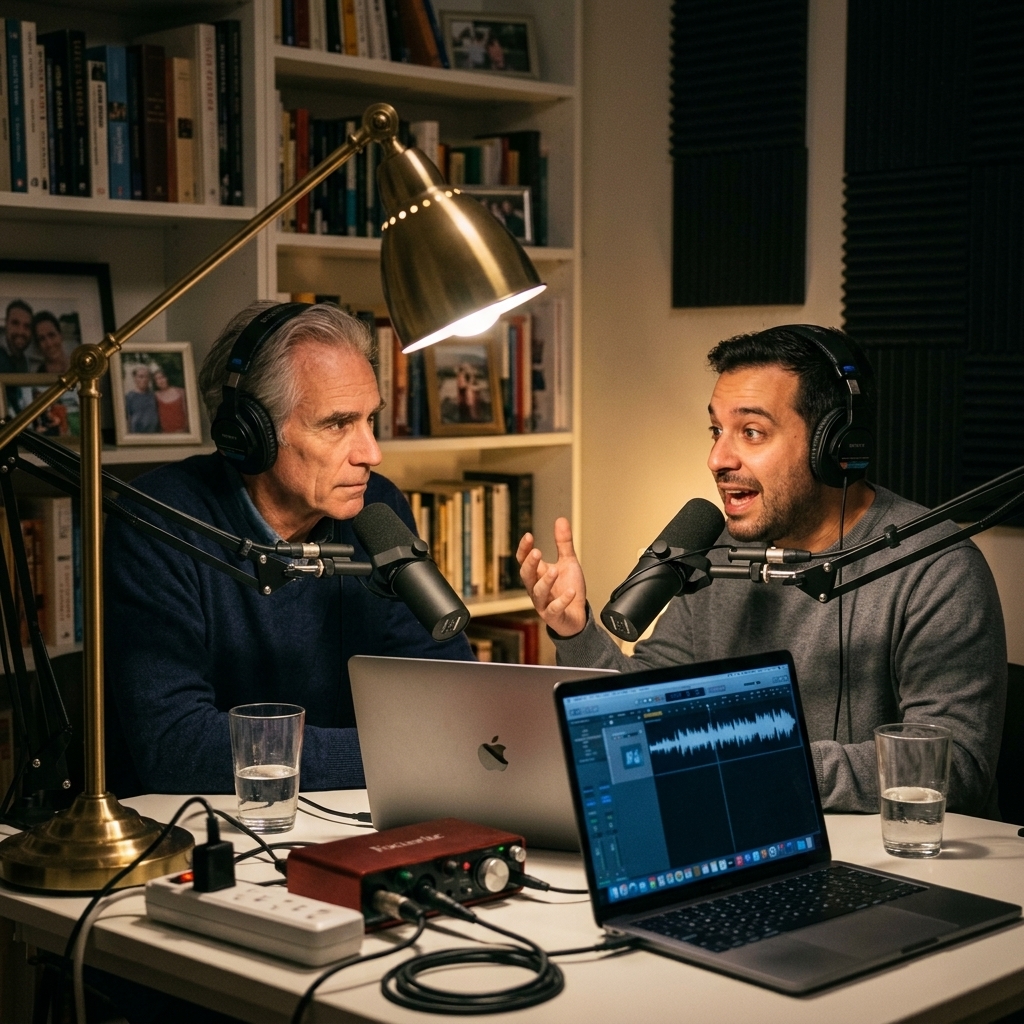
The listening gap: what you can produce vs. what you can understand
| Skill | Typical self-study focus | Reality check |
|---|---|---|
| Vocabulary | Anki decks, word lists | Reading words ≠ recognizing them in fast speech |
| Grammar | Conjugation drills, rules | You recognize structures when you write. Do you catch them when someone speaks? |
| Speaking | Conversation practice | Useless if you cannot understand the response |
| Listening | Occasional podcast, hope | Requires deliberate, daily practice to improve |
Why Spanish listening is harder than Spanish reading
Most learners discover this the hard way. They spend months building vocabulary and can read a Spanish news article reasonably well. Then they try to watch a Mexican TV show or talk to a native speaker and understand almost nothing.
This is not a vocabulary problem. It is a processing problem.
When you read, the words stay on the page. You can slow down, re-read, look things up. When you listen, speech happens at 130-160 words per minute and does not wait for you. Several things make this hard:
Connected speech. Spanish words do not arrive neatly separated. "¿Cómo estás?" sounds like "comoestás." "Va a ir" sounds like "vair." Sounds merge across word boundaries in patterns you have never seen in a textbook. Until your ear trains to segment the stream, you hear blur, not words.
Phoneme discrimination. Spanish has 5 vowel sounds, English has 12-15. But Spanish consonants behave differently. The letters b and v are phonetically identical in most dialects. The letter r has two distinct sounds that are difficult for English speakers to hear as different until they have heard them hundreds of times. The brain needs exposure to learn to tell these apart.
Accent variation. The Spanish you learn in a textbook is a kind of idealized Castilian or neutral Latin American Spanish. Real spoken Spanish — Mexican, Argentine, Caribbean, Andalusian — sounds dramatically different. Syllable-final consonants disappear. Vowels reduce. Speakers elide entire syllables. A learner who has only heard slow, clear Spanish will struggle with any real accent.
Processing speed. Even when you know all the words in a sentence, understanding speech requires processing them in real time, holding them in working memory, and building meaning before the next sentence arrives. This is a skill that develops with practice, not with vocabulary lists.
"I had a humbling experience in Mexico City. I had been studying Spanish for eight months. I could write a decent email in Spanish. I sat down with Octavio's cousin and understood maybe one sentence in five."
"He understood 'sí' and 'okay' and 'cerveza.' Survival vocabulary."
"Accurate. My reading was B1. My listening was A1. The gap was enormous."
"It is like how I know all the words to songs I did not try to memorize. Repetition in context just works."
Good sources for extensive listening:
- Twilingua episodes you have already done at least once (browse the archive)
- Bilingual podcasts designed for your level
- Spanish-language shows on topics you already know well
Technique 2: Intensive listening with transcript
What it is: Focused, careful listening while reading along with a transcript, pausing to analyze what you hear.
What it builds: Phoneme recognition, vocabulary depth, grammar pattern awareness.
How to do it: Take a single episode or short segment (10-20 minutes). Listen while following the transcript word by word. When you hear something unexpected — a sound you do not recognize, a phrase you do not understand, a word that sounds nothing like how it is spelled — stop and investigate. Why did "para" sound like "pa"? Why did "de él" sound like "del"? Understanding these contractions and connected speech patterns transforms your listening.
This technique is detailed further in our guide to Spanish podcasts with transcripts, which covers how to use transcripts at each level without becoming dependent on them.
Extensive listening builds volume and fluency. Intensive listening with transcripts builds precision. You need both. The ratio should shift over time: early learners benefit from more intensive work; advanced learners should do more extensive listening as their comprehension matures.
Technique 3: Dictation exercises
What it is: You listen to a segment of Spanish and write down exactly what you hear, then compare to the transcript.
What it builds: Phoneme discrimination, spelling-to-sound mapping, connected speech awareness.
How to do it:
- Choose a 30-90 second segment of a podcast at your level
- Listen once without writing — just to get the overall sense
- Listen again and write down every word you can catch
- Listen a third time and fill gaps
- Compare to the transcript. Mark every error.
- Look up the rules or patterns behind each error
Dictation errors reveal exactly what your ear is missing. If you wrote "vive" but the word was "vibe" (and those sound the same to you), you know you need more exposure to b/v phoneme pairs. If you consistently miss articles ("el," "un") before nouns, you know your ear is not yet processing function words automatically.
"Dictation is humbling. I thought I was listening. Then I tried to write down what I heard and realized I was filling in half the sentence from context and guessing the rest."
"That is actually normal. That is how human comprehension works — we predict as much as we perceive. The problem is when your predictions are wrong and you do not realize it."
A 10-minute dictation routine:
- Select a passage from an episode you have already listened to (2-3 min)
- Dictate it (5 min)
- Compare and analyze errors (2 min)
- Re-listen to the difficult segment one more time (1 min)
Technique 4: Shadowing
What it is: You listen to a speaker and repeat what they say in real time, matching their rhythm, speed, and intonation as closely as possible.
What it builds: Pronunciation, speech rhythm, connected speech production — and surprisingly, comprehension.
How to do it: Choose a short segment (30-60 seconds) of clear, level-appropriate Spanish. Play it and speak along, trying to match the speaker as closely as you can. You will lag behind slightly at first. With practice, you close the gap. The goal is not perfect pronunciation — it is training your mouth and ear to track natural speech rhythm.
Shadowing trains listening comprehension because it forces you to process speech at the speaker's pace rather than yours. You cannot slow the recording down. You learn to keep up.
"This is one of the best-kept secrets in language learning. When you shadow, you internalize the phonological patterns of the language at the motor level. Your mouth is learning, which teaches your ear."
"I felt ridiculous the first three times. Mumbling along to a podcast like a sleep-talking person. Then I noticed that I could suddenly hear word boundaries I had been missing."
A good shadowing episode is one where the speaker is clear, not too fast, and uses vocabulary you already know — so all your attention goes to rhythm and sound, not meaning.
Technique 5: Re-listening for fluency
What it is: You listen to an episode you have already studied carefully, but this time without a transcript or any active effort. Just listen.
What it builds: Processing automaticity, listening fluency, effortless comprehension.
How to do it: After you have done the intensive work on an episode — followed the transcript, saved words, analyzed difficult sections — come back to the same episode one or two days later and listen straight through without any support. No transcript, no pausing.
You will be surprised by how much you now catch. Words that blurred into noise on first listen are now recognizable. Phrases that required the transcript to decode now make sense on sound alone. This is listening fluency developing in real time.
The critical point: re-listening is not re-studying. You are not looking things up again. You are building the automatic processing pathways that make comprehension feel effortless. As covered in our complete guide to learning Spanish with podcasts, this second pass is where much of the actual acquisition happens.
| Technique | Time investment | Level requirement | Key benefit |
|---|---|---|---|
| Extensive listening | High volume, low effort | A2+ | Builds vocabulary familiarity and listening stamina |
| Intensive listening with transcript | Focused, medium sessions | A2+ | Precision, connected speech, vocabulary depth |
| Dictation | Short, high-focus sessions | A2+ | Pinpoints exact gaps in phoneme recognition |
| Shadowing | Short, active sessions | B1+ | Speech rhythm, connected speech, processing speed |
| Re-listening | Low effort, any time | A2+ | Converts studied content into automatic comprehension |
Level-by-level Spanish listening exercise progression
The right exercises depend on your level. Here is how to map technique to CEFR stage.
A2 (elementary)
Your vocabulary is limited (500-1,000 words). Connected speech is very difficult. You need:
- Maximum English scaffolding before and after Spanish content
- Short episodes (10-15 minutes)
- Full transcripts available
- Heavy use of intensive listening + transcript and re-listening
- Avoid shadowing until you have more vocabulary
Target comprehension: 85-95% with transcript support; 60-70% without
Best exercise split:
- 40% intensive listening with transcript
- 40% re-listening without transcript
- 20% dictation on short segments
B1 (intermediate)
You can follow the main points of clear, level-appropriate speech. Connected speech is still difficult. You need:
- Bilingual podcasts where the Spanish segment is real-speed but the vocabulary is controlled
- Longer episodes (15-25 minutes)
- Both intensive and extensive listening
- Start introducing shadowing on familiar content
Target comprehension: 85-95% with transcript; 70-80% without
Best exercise split:
- 30% intensive listening with transcript (new content)
- 30% extensive listening (previously studied content)
- 20% shadowing
- 20% dictation
B2 (upper intermediate)
You can understand most extended speech on familiar topics. You need:
- Monolingual Spanish content supplemented with transcripts
- Wider topic range to build domain vocabulary
- More extensive listening at natural speed
- Focus shadowing on accents different from your primary exposure
Target comprehension: 90%+ on familiar topics; 75-80% on unfamiliar topics
Best exercise split:
- 40% extensive listening (varied sources)
- 30% intensive listening on challenging new content
- 20% shadowing (target accent variety)
- 10% dictation (spot-check phoneme gaps)
The goal of the comprehensible input approach — described in detail in our guide to comprehensible input for Spanish — is to always work near the top of your comfortable range. Just hard enough to grow, not so hard that you stop understanding.
A realistic 30-minute daily listening practice routine
Consistency beats intensity. Thirty minutes every day produces better results than three hours on Saturday. Here is a structured daily routine that works at any level.


Daily 30-minute Spanish listening routine
| Time block | Activity | Technique | What you are building |
|---|---|---|---|
| 0-5 min | Re-listen to yesterday's episode | Re-listening for fluency | Automatic processing; consolidate yesterday's learning |
| 5-20 min | Listen to new episode with transcript | Intensive listening | New vocabulary, connected speech, comprehension depth |
| 20-25 min | Dictation on one difficult segment | Dictation | Exact phoneme gaps; spelling-to-sound mapping |
| 25-30 min | Shadow one 60-second passage | Shadowing | Speech rhythm; processing speed |
Notes on the routine:
- The re-listen comes first because it is low-effort and warms up your ear
- The transcript session is the core work — use it actively, not passively
- The dictation segment can be from the new episode or from the re-listen episode
- Shadowing the new content is hard — instead, shadow something from yesterday when you already know what is being said
On days when you have only 15 minutes: skip the dictation and shadowing, and do the re-listen plus 10 minutes of intensive listening with transcript. A shorter session done consistently beats a longer session done occasionally.
The four biggest Spanish listening practice mistakes
Most learners make the same mistakes. Each one costs months of progress.
Mistake 1: Practicing at the wrong level
If you understand less than 70% of what you hear, you are not practicing — you are just being confused. The research is clear that incidental acquisition requires a comprehension rate of at least 85-95%. Below that threshold, the unfamiliar words are not surrounded by enough context for the brain to infer meaning.
Fix: Drop to easier content. If you are A2, choose a bilingual podcast with English framing. If you are B1, pick episodes where the Spanish is calibrated to your level. Feeling challenged but mostly comprehending is the right sensation. Feeling lost is a sign to go lower, not to push through.
Mistake 2: Only doing passive listening
Extensive listening is valuable. But it needs to be the listening equivalent of extensive reading — you are engaged, following the content, building meaning. Having Spanish on in the background while you answer emails is not extensive listening. It is background noise that your brain has learned to filter out.
Fix: Dedicate specific listening sessions where Spanish has your attention. Even 15 minutes of focused listening is worth more than two hours of ambient Spanish.
"I spent three months listening to Spanish podcasts on my commute without any real improvement. Then I started following along with the transcript and I saw progress within two weeks."
"Attention is the prerequisite. Without it, the brain does not encode anything."
Mistake 3: Skipping the re-listen
The second listen is where listening fluency actually develops. Most learners listen to an episode once, feel okay about it, and move on. They are leaving the most important practice session on the table.
Fix: Build re-listening into your daily routine. The five-minute re-listen at the start of the day is one of the highest-value activities in language learning. It costs almost no effort — you already know the content — but it is building the automatic processing pathways that make comprehension feel effortless.
Mistake 4: Treating all Spanish audio as equivalent practice
Listening to a native-speed news broadcast when you are A2 is not practice. It is exposure to incomprehensible noise. Listening to an episode five levels below your ability is not challenging enough to grow. The content, level, and format all matter.
Fix: Choose content deliberately. Match the format to the technique: bilingual scaffolded content for intensive work, previously-studied episodes for re-listening and extensive practice, level-appropriate clear speech for shadowing.
How to know if your Spanish listening is improving
Progress in listening comprehension is often invisible until it is not. You do not notice it day to day. Then one day you realize you understood a whole conversation without straining.
Here are concrete metrics to track:
Comprehension percentage without transcript. Listen to a new episode you have not studied and estimate the percentage you understand. Track this over time. A learner who goes from 55% to 70% to 80% over three months is making clear progress.
Word segmentation. Can you hear where one word ends and another begins? Pick a familiar sentence from an episode you have studied. Can you hear "¿Cómo estás?" as two distinct words at natural speed, or does it still sound like one word? Improvement here is a signal that your phonological processing is developing.
Recovery speed. When you miss a word, how long does it take to get back on track? Early learners miss one word and lose the next three sentences. Improving listeners miss a word and recover by the next phrase. Track how often missing one word causes a cascade of confusion.
Effort level. Comprehension at the same difficulty level should feel progressively easier. If an A2 episode that exhausted you three months ago now feels effortless, your A2 comprehension has automatized. Time to move up.
The "aha" moment test. Periodically try a native-speed source — a TV clip, a radio segment — that you would not normally listen to for study. Do not worry about full comprehension. Just notice whether you understand more than you did three months ago. Even going from 15% to 25% comprehension of native-speed content is real progress.
"My benchmark for students is: can you catch the punchline of a joke before the laugh track? Jokes require you to process fast and understand context. When you start getting the jokes, you are somewhere around B1."
"I remember the first time I laughed at a Spanish joke in real time, not two seconds later when I had processed it. That felt like a real milestone."
Monthly progress check
| Metric | Month 1 | Month 3 | Month 6 | Target (B1) |
|---|---|---|---|---|
| Comprehension without transcript (level-appropriate) | 55-65% | 65-75% | 75-85% | 80%+ |
| New episode comprehension with transcript | 80-85% | 85-90% | 90-95% | 90%+ |
| Recovery speed after missed word | 3-5 sentences | 1-2 sentences | Same phrase | Same phrase |
| Native-speed content comprehension | 10-20% | 20-35% | 35-50% | 40%+ |
These are estimates for a learner starting at A2 doing 30 minutes of deliberate practice per day. Results vary based on prior exposure, languages known, and consistency.
FAQ
How long does it take to improve Spanish listening comprehension?
With 30 minutes of deliberate practice per day, most A2 learners see measurable improvement in comprehension percentage within 4-6 weeks. The first milestone — consistently understanding 80%+ of level-appropriate content without a transcript — typically takes 3-5 months from A2. The larger jump from B1 to B2 listening comprehension (where you can follow most native-speed speech on familiar topics) usually takes an additional 6-12 months of consistent practice. Consistency matters far more than session length.
Should I use subtitles when watching Spanish TV?
It depends on your level and your goal. Spanish subtitles (not English subtitles) on Spanish content can be effective for B1+ learners — they provide reading support while training your ear to connect sound to text. English subtitles are less useful for listening practice because your brain will process the English and tune out the Spanish. If you are below B1, choose pedagogically designed content at your level rather than native TV, which will have too large a comprehension gap for effective acquisition.
How do I practice Spanish listening without a language partner?
Podcasts with transcripts are the most effective solo practice tool. Use the intensive listening technique (listen with transcript, analyze difficult segments, dictate short passages) for 15-20 minutes per day. For speaking practice feedback, you can also record yourself shadowing and compare to the original. Language exchange apps like Tandem or HelloTalk can supplement this with real conversation practice, but the podcast-based listening work can be done entirely alone and is highly effective.
Why do I understand Spanish much better in class than in real life?
Classroom Spanish is typically spoken at a reduced rate, with clearer articulation, less regional accent, and more careful word separation. Real-world Spanish — including native podcasts, TV, and conversation — uses connected speech patterns, regional accent features, and natural speed. The solution is not to avoid native-speed content forever, but to build up to it progressively. Start with bilingual scaffolded podcasts at your level, then move to controlled-speed Spanish, then to natural-speed content with transcripts, then to natural-speed content alone.
Is there a difference in how hard it is to understand different Spanish accents?
Yes, and it matters for your practice. Mexican Spanish and some Latin American accents are generally considered more accessible for learners because they tend to preserve final consonants and have somewhat clearer vowels. Caribbean Spanish (Cuban, Dominican, Puerto Rican) and Andalusian Spanish drop syllable-final consonants heavily and can be significantly harder for learners. Argentine Spanish has distinctive intonation patterns. The best approach is to develop solid comprehension of one variety first, then systematically expose yourself to others. Twilingua episodes use clear, natural-speed Spanish that serves as a good foundation before you branch into heavier dialect exposure.
Start building your listening comprehension today
The gap between what you can say in Spanish and what you can understand is real — and it closes faster than most learners expect once they shift from studying vocabulary to practicing listening.
Start with the five-minute re-listen. Pull up an episode you have heard once before and play it without the transcript. Notice what you understand now that you did not catch the first time. That sensation of comprehension expanding is listening fluency in the making.
Every episode you listen to deliberately — with attention, with a transcript when you need it, and with a re-listen the next day — builds the automatic processing your brain needs to follow real Spanish in the real world.