A2 · Elementary
8 min
culturehistorytravelsociety
Tourists Throw the Tomatoes. Locals Watch from the Balcony.
Los turistas corren. Los locales miran.
Spain has more than eight thousand municipalities, and nearly all of them celebrate their patron saint with a festival of their own. Fletcher and Octavio dig into what really lies behind Spanish fiestas: the history, the regional identity, and the growing debate about what gets lost when the tourists arrive.
España tiene más de ocho mil municipios, y casi todos celebran a su santo patrón con una fiesta propia. Fletcher y Octavio exploran qué hay detrás de las fiestas españolas: la historia, la identidad regional, y el debate sobre lo que se pierde cuando los turistas llegan.


5 essential A2-level terms from this episode, with translations and example sentences in Spanish.
| Spanish | English | Example |
|---|---|---|
| hay | there is / there are | Hay una fiesta en el pueblo esta noche. |
| fiesta | festival, celebration, party | La fiesta de San Isidro es muy famosa en Madrid. |
| pueblo | village, town, people | Cada pueblo en España tiene su propio santo patrón. |
| celebrar | to celebrate | La gente celebra con música y comida. |
| alma | soul | La fiesta tiene un alma. Si pierdes el alma, ¿qué tienes? |
Alright, I want to put a number on the table: Spain has more public holidays than almost any country in Europe.
I kept reading that and thinking, that cannot possibly be right.
And then I looked into it.
Sí, es verdad.
Yes, it's true.
Hay muchas fiestas en España.
There are many festivals in Spain.
Muchas.
Many.
When I first arrived in Madrid years ago, I landed on a Thursday and by Monday three separate things had closed without warning because of some local celebration I'd never heard of.
I asked my fixer what was happening and she looked at me like I was the strange one.
En España, las fiestas son normales.
In Spain, festivals are normal.
No son especiales.
They are not special.
Son parte de la vida.
They are part of life.
Part of life.
And that's exactly what I want to dig into today, because when most people outside Spain think about Spanish festivals they picture the running of the bulls, or people pelting each other with tomatoes.
Which is real, but it's maybe five percent of the picture.
La Tomatina es pequeña.
La Tomatina is small.
Muy pequeña.
Very small.
Hay fiestas en cada ciudad y en cada pueblo.
There are festivals in every city and in every village.
Every village.
And this is the part that genuinely staggered me when I looked at the numbers.
Spain has roughly eight thousand municipalities.
Nearly every single one has a patron saint, and that patron saint gets a festival.
Some towns have two or three.
El santo del pueblo es muy importante.
The village saint is very important.
La gente celebra con comida y música.
People celebrate with food and music.
Siempre.
Always.
Always.
And here is where it gets genuinely complicated, because a lot of these patron saint festivals are technically religious but functionally pretty secular.
You ask a Spaniard if they're going to the fiesta de San Isidro in Madrid and they'll say yes, enthusiastically, without necessarily setting foot inside a church.
Hay dos partes en la fiesta.
There are two parts to the festival.
La parte religiosa y la parte de la calle.
The religious part and the street part.
La gente prefiere la calle.
People prefer the street.
The street part.
Which raises a question I've been sitting with for a while: is Spain fundamentally a religious country that celebrates, or a secular country that uses religious structure as a framework for community?
Las dos cosas.
Both things.
España es complicada.
Spain is complicated.
La iglesia es parte de la historia.
The church is part of history.
Pero la fiesta es de todos.
But the festival belongs to everyone.
The festival belongs to everyone.
That's a pretty elegant way to hold two things at once.
And Semana Santa is the sharpest example of that tension I can think of.
Holy Week.
Robed brotherhoods carrying enormous floats through narrow streets at midnight.
It is the most visually extraordinary thing I have ever watched happen in a public space.
En Sevilla, la Semana Santa es muy seria.
In Seville, Holy Week is very serious.
La gente llora en la calle.
People cry in the street.
Es muy emocionante.
It is very moving.
Genuinely weep.
I watched a man in his sixties standing alone on a corner in Seville at two in the morning, tears running down his face, and he wasn't performing anything for anyone.
That was real grief and real devotion right there on the pavement.
Pero en otras ciudades, la Semana Santa es diferente.
But in other cities, Holy Week is different.
En Madrid es más tranquila.
In Madrid it is calmer.
Cada ciudad tiene su versión.
Each city has its own version.
Each city has its own version.
And I think that's something outsiders consistently miss.
These aren't standardized national events with a fixed form.
Even Semana Santa looks completely different in Seville, Valladolid, Málaga, Cartagena.
Spain is not a monolith in any useful sense.
España tiene muchas regiones.
Spain has many regions.
Las fiestas son diferentes en cada región.
The festivals are different in each region.
Eso es normal aquí.
That is normal here.
And some of those regional differences go very, very deep.
Las Fallas in Valencia.
Tell me if I have this right: you spend an entire year, sometimes two years, building these enormous sculptural figures, some costing hundreds of thousands of euros, and then on one single night in March you burn every last one of them.
Sí.
Yes.
Las Fallas son increíbles.
Las Fallas are incredible.
Todo arde en una noche.
Everything burns in one night.
Es muy hermoso.
It is very beautiful.
Y muy triste también.
And very sad too.
Beautiful and sad at the same time.
That's genuinely profound as a civic ritual, this built-in annual act of surrender.
The whole city collaborates on something magnificent and then stands there and watches it disappear.
There's an entire philosophy of impermanence encoded in that.
Los valencianos dicen que el fuego es vida nueva.
Valencians say that fire is new life.
El año empieza con el fuego.
The year begins with fire.
Me gusta esa idea.
I like that idea.
Now I have to ask you about San Fermín, because this is the one every American has a strong opinion about thanks to Hemingway.
The running of the bulls in Pamplona.
What do locals in Pamplona actually think of the way that festival gets covered and sold to the world?
Los de Pamplona aman la fiesta.
The people of Pamplona love the festival.
Pero no les gusta la imagen del turismo.
But they do not like the tourism image.
La fiesta es más que los toros.
The festival is more than the bulls.
Hay música, comida y tradición.
There is music, food, and tradition.
So the bulls became the hook that pulled the world in, but the actual festival is a week-long thing with roots going back centuries, and what gets photographed and exported is one dangerous slice that lasts about three minutes a morning.
Exacto.
Exactly.
Los turistas corren con los toros.
Tourists run with the bulls.
Los locales celebran con la familia.
Locals celebrate with family.
Son dos fiestas diferentes.
They are two different festivals.
Two different festivals happening in the same place at the same time.
That's actually a really useful frame for thinking about what's happened across the board to Spain's most famous celebrations.
The spectacle gets exported.
The community holds something else underneath, quieter and much older.
La Tomatina es un buen ejemplo.
La Tomatina is a good example.
Antes era una fiesta pequeña y local.
Before, it was a small, local festival.
Ahora hay muchos turistas.
Now there are many tourists.
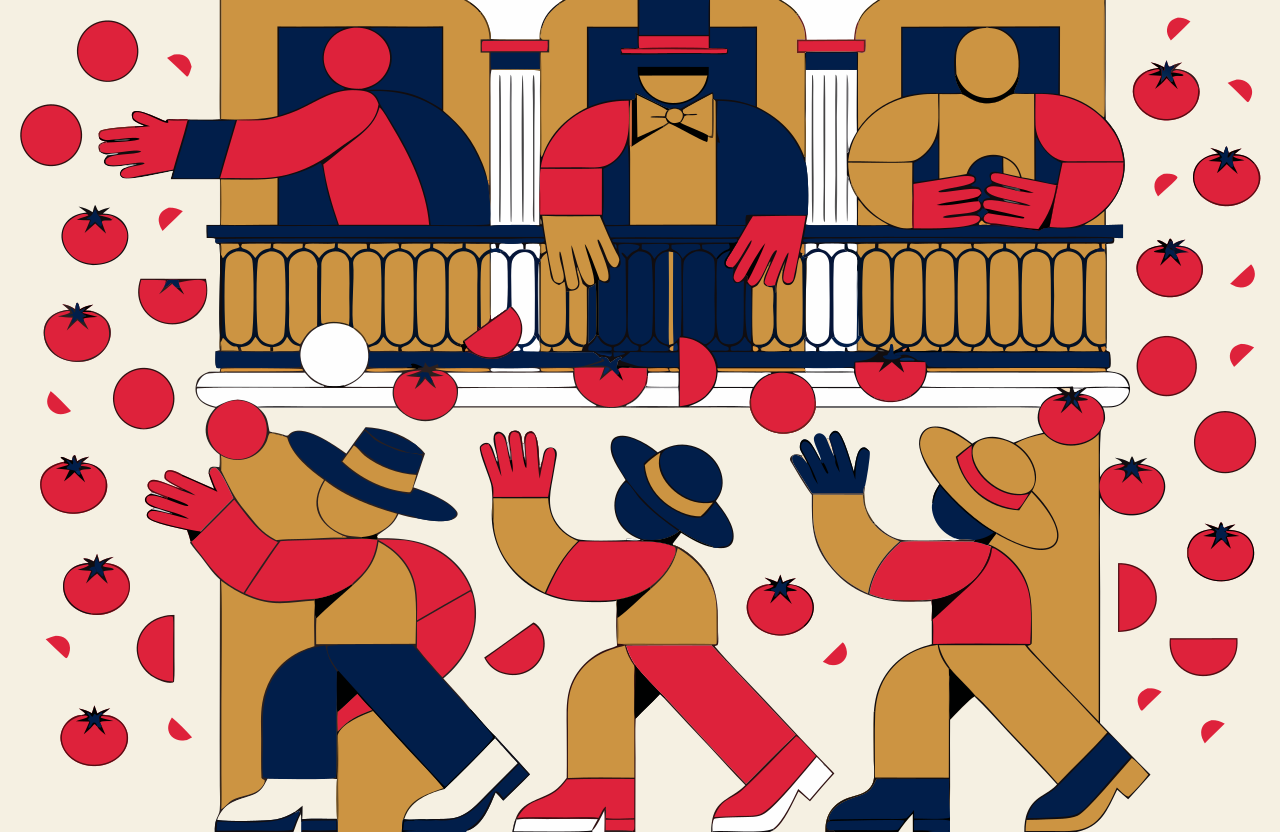
Los de Buñol no tiran tomates.
The people of Buñol do not throw tomatoes.
Ellos miran desde el balcón.
They watch from the balcony.
The locals stand on their balconies and watch foreigners throw tomatoes at each other.
There is something almost philosophical about that inversion.
Hay un debate en España ahora.
There is a debate in Spain now.
¿Las fiestas son para los turistas o para los locales?
Are the festivals for tourists or for locals?
Es una pregunta muy importante.
It is a very important question.
And that debate has real stakes, because the money tourism brings in does sustain these towns and funds the celebrations themselves in some cases.
But if the festival becomes primarily a performance for visitors, something in the original texture of it shifts.
You can feel it happen.
Sí.
Yes.
El dinero es importante.
Money is important.
Pero la fiesta tiene un alma.
But the festival has a soul.
Si pierdes el alma, ¿qué tienes?
If you lose the soul, what do you have?
What do you have.
And I think that question lands harder in Spain than in a lot of other places, because the fiestas aren't peripheral to community identity.
They're central to it.
They're how towns actually remember who they are year after year.
Las fiestas son identidad.
Festivals are identity.
En el País Vasco, las fiestas son vascas.
In the Basque Country, the festivals are Basque.
En Cataluña, son catalanas.
In Catalonia, they are Catalan.
No es solo celebrar.
It is not just celebrating.
Es decir: yo soy de aquí.
It is saying: I am from here.
I am from here.
You know, that phrase caught me.
You said 'soy de aquí.' And all episode you've been saying things like 'hay fiestas en cada pueblo,' 'hay música,' 'hay un debate.' I want to make sure I understand that word, 'hay,' because it's not quite like anything in English.
'Hay' es especial.
'Hay' is special.
'Hay una fiesta.' 'Hay muchas fiestas.' Es la misma palabra para uno o para muchos.
'There is a festival.' 'There are many festivals.' It is the same word for one or for many.
So in English we split the job between two phrases: 'there is' for a single thing and 'there are' for more than one.
Spanish gives you one word and it handles both.
That's actually a real simplification, and I wish someone had pointed it out to me years ago.
Sí.
Yes.
'Hay' es muy útil.
'Hay' is very useful.
'Hay un problema.' 'Hay muchos problemas.' Siempre 'hay.' Es fácil, Fletcher.
'There is a problem.' 'There are many problems.' Always 'hay.' It is easy, Fletcher.
Easy.
A word I do not use often when describing Spanish.
But I'll take it wherever I can find it.
Let me try: 'Hay una fiesta esta noche en el pueblo.' Did I get that?
Sí, perfecto.
Yes, perfect.
Ves, no siempre dices cosas raras.
See, you do not always say strange things.
Solo a veces.
Only sometimes.