B1 · Intermediate
11 min
mental healthmedicinedrug policyneuroscience
New Zealand Just Prescribed Ecstasy
La droga de los noventa llega a la consulta
New Zealand has become the second country in the world to authorize pharmaceutical-grade MDMA as a treatment for severe PTSD. Fletcher and Octavio trace the strange history of a molecule that governments banned in the 1980s and that scientists have spent decades trying to get back.
Nueva Zelanda se convierte en el segundo país del mundo en autorizar el MDMA como tratamiento médico para el trastorno de estrés postraumático grave. Fletcher y Octavio exploran la historia de una molécula que los gobiernos prohibieron en los años ochenta y que los científicos llevan décadas intentando recuperar.

6 essential B1-level terms from this episode, with translations and example sentences in Spanish.
| Spanish | English | Example |
|---|---|---|
| recetar | to prescribe | El médico puede recetar este medicamento solo en casos muy graves. |
| medicamento | medication, medicine | Tomo un medicamento todas las mañanas para el corazón. |
| fármaco | pharmaceutical drug, medication | Los científicos estudian este fármaco para tratar el estrés postraumático. |
| estrés postraumático | post-traumatic stress (disorder) | Muchos soldados sufren estrés postraumático después de la guerra. |
| restringido | restricted, limited | El acceso a este tratamiento es muy restringido por ahora. |
| psiquiatra | psychiatrist | Solo un psiquiatra con licencia especial puede usar este tratamiento. |
There's a sentence I never expected to read in a government press release: two licensed psychiatrists in New Zealand can now legally prescribe MDMA to their patients.
Sí, y cuando leí la noticia, pensé: cuánto tiempo tardamos en llegar aquí.
Yes, and when I read the news, I thought: how long it took us to get here.
Porque esto no es nuevo.
Because this isn't new.
Los científicos estudiaron el MDMA como medicina mucho antes de que fuera una droga en las discotecas.
Scientists were studying MDMA as a medicine long before it became a club drug.
That's exactly the piece of history that keeps getting buried.
This wasn't some underground chemist who stumbled onto a party drug.
MDMA had a real research life before it got scheduled.
Exacto.
Exactly.
El MDMA existe desde 1912.
MDMA has existed since 1912.
Una empresa alemana lo inventó como medicamento para controlar el sangrado.
A German company invented it as a medication to control bleeding.
Pero no lo usaron mucho entonces.
But they didn't use it much at the time.
Right, and then it basically sat on a shelf for decades.
The story picks up again in the seventies, with a chemist named Alexander Shulgin.
Shulgin es una figura muy interesante.
Shulgin is a very interesting figure.
Él sintetizó el MDMA de nuevo en los años setenta y lo probó con psicólogos y terapeutas.
He resynthesized MDMA in the seventies and tested it with psychologists and therapists.
Ellos decían que los pacientes hablaban más, que tenían menos miedo.
They said patients talked more, that they had less fear.
Which, if you think about it, is exactly what you want when you're treating trauma.
Trauma makes people shut down, wall off, dissociate.
A substance that lowers that defensive wall without sedating you, that's a genuinely novel pharmacological idea.
Sí.
Yes.
Y había terapeutas en Estados Unidos que lo usaban con pacientes en los años ochenta, antes de que fuera ilegal.
And there were therapists in the United States using it with patients in the eighties, before it was illegal.
Decían que una sola sesión podía abrir conversaciones que eran imposibles sin la sustancia.
They said a single session could open conversations that were impossible without the substance.
And then 1985 happened.
The DEA put it in Schedule I, which is the category that says: no accepted medical use, high potential for abuse.
Same category as heroin.
Y cuando ponen una sustancia en esa categoría, es casi imposible estudiarla.
And when they put a substance in that category, it becomes almost impossible to study it.
Los científicos no pueden conseguir permiso fácilmente.
Scientists can't easily get permission.
El dinero no llega.
Funding doesn't come.
La investigación se para.
Research stops.
Meanwhile, through the late eighties and the entire nineties, MDMA is becoming the defining drug of rave culture, ecstasy, millions of young people taking it in fields in Britain and warehouses in Ibiza, and the image is completely locked in.
Claro, y eso fue un problema enorme para los científicos.
Right, and that was a massive problem for scientists.
Porque la gente escuchaba 'MDMA' y pensaba solo en las discotecas, en los jóvenes, en el peligro.
Because people heard 'MDMA' and thought only of clubs, of young people, of danger.
Era muy difícil hablar de medicina.
It was very hard to talk about medicine.
The cultural baggage was enormous.
And that's not a trivial thing, because drug policy is not purely scientific, it's political, it's moral, it carries the weight of whoever was scared of what at what particular moment.
Sí, exactamente.
Yes, exactly.
Pero en los años dos mil, algunos científicos empezaron a investigar de nuevo, con mucho cuidado.
But in the 2000s, some scientists started researching again, very carefully.
Y los resultados con pacientes con estrés postraumático fueron sorprendentes.
And the results with post-traumatic stress disorder patients were surprising.
MAPS, the Multidisciplinary Association for Psychedelic Studies, drove a lot of that.
They spent years running Phase 2 and Phase 3 clinical trials, and the Phase 3 data was striking.
Something like sixty-seven percent of participants no longer met the diagnostic criteria for PTSD after treatment.
Y eso es muy diferente a los tratamientos normales.
And that's very different from standard treatments.
Con los medicamentos tradicionales para el estrés postraumático, los pacientes mejoran un poco, pero muchos no se curan.
With traditional medications for PTSD, patients improve a little, but many don't recover.
El problema continúa durante años.
The problem continues for years.
Veterans, first responders, survivors of sexual assault, people who've been carrying this thing for a decade and nothing has touched it.
That's who these trials were focused on.
Y el MDMA no funciona como un antidepresivo normal.
And MDMA doesn't work like a normal antidepressant.
No tomas la pastilla todos los días.
You don't take the pill every day.
Tomas el MDMA solo durante unas pocas sesiones de terapia, con un psiquiatra, en un lugar controlado.
You take the MDMA during just a few therapy sessions, with a psychiatrist, in a controlled setting.
Es completamente diferente.
It's completely different.
That distinction matters a lot, because one of the fears around this is people imagining some kind of recreational loophole.
But the protocol is intense.
You're in a clinic.
You have therapists present the entire time.
You prepare beforehand and integrate afterward.
Exacto.
Exactly.
Y en Nueva Zelanda, solo dos psiquiatras pueden recetar esto ahora mismo.
And in New Zealand, only two psychiatrists can prescribe this right now.
No es una situación donde cualquier médico puede decir 'toma MDMA'.
It's not a situation where any doctor can say 'take MDMA.' It's a very restricted system.
Es un sistema muy restringido.
Australia was first, last year.
New Zealand is now second.
The question that interests me is: why these two countries?
Why not the United States, which has the largest veteran population dealing with PTSD in the world and also did most of the original research?
Eso es una pregunta muy buena.
That's a very good question.
Creo que en Estados Unidos el problema político es muy grande.
I think in the United States the political problem is very large.
La palabra 'droga' tiene mucho poder.
The word 'drug' has a lot of power.
Muchos políticos no quieren aparecer apoyando algo que la gente asocia con las fiestas.
Many politicians don't want to appear to be supporting something people associate with parties.
The FDA actually rejected MAPS's application for approval back in 2024.
They had concerns about the trial design, the blinding problem, which is genuinely hard to solve because participants can tell whether they're in the placebo group.
Sí, ese es un problema real para los científicos.
Yes, that's a real problem for scientists.
Cuando tomas MDMA, sabes que tomaste algo.
When you take MDMA, you know you took something.
No puedes fingir que no lo sabes.
You can't pretend otherwise.
Entonces es difícil hacer un estudio 'ciego', donde nadie sabe si tomó el medicamento o no.
So it's hard to do a 'blind' study, where no one knows whether they took the medication or not.
Which is a methodological challenge shared by basically every psychedelic therapy trial, psilocybin, ketamine, all of them.
The science has to develop new frameworks because the old frameworks weren't designed for substances that are this perceptible.
Y aun así, los resultados con el MDMA fueron tan buenos que Australia y Nueva Zelanda decidieron seguir adelante.
And even so, the results with MDMA were good enough that Australia and New Zealand decided to move forward.
Para ellos, los datos eran suficientes, especialmente para pacientes que no respondían a otros tratamientos.
For them, the data was sufficient, especially for patients who didn't respond to other treatments.
There's a phrase in medicine, 'treatment-resistant,' and when someone qualifies for that label it means everything else has been tried.
At that point the calculus around risk shifts considerably.
Exactamente.
Exactly.
Y el problema del estrés postraumático en el mundo es enorme.
And the problem of post-traumatic stress disorder in the world is enormous.
No solo en los soldados.
Not only in soldiers.
También en las víctimas de violencia, de desastres naturales, de accidentes graves.
Also in victims of violence, natural disasters, serious accidents.
Hay millones de personas que viven con esto.
There are millions of people living with this.
I spent time embedded with troops in Afghanistan, and when I came back, I watched colleagues process that experience in very different ways.
Some found therapy, some found other outlets.
Some didn't find anything that worked.
That gap in effective treatment is not abstract to me.
Y eso es importante para entender por qué esto es tan significativo.
And that's important to understand why this is so significant.
No es una historia sobre drogas recreativas.
It's not a story about recreational drugs.
Es una historia sobre personas que sufrieron mucho y que ahora tienen una posibilidad de mejorar que antes no existía.
It's a story about people who suffered a great deal and who now have a possibility of improvement that didn't exist before.
Will other countries follow?
Switzerland has some provisions for compassionate use.
Canada has been moving in this direction.
The UK is watching.
But there's still this enormous political friction, especially in places with strong drug-war legacies.
En España, creo que el debate llegará pronto.
In Spain, I think the debate will come soon.
Hay investigadores españoles que trabajan con psilocibina y con ketamina.
There are Spanish researchers working with psilocybin and with ketamine.
El MDMA es el próximo paso lógico.
MDMA is the logical next step.
Pero la conversación pública todavía no llegó.
But the public conversation hasn't arrived yet.
Ketamine is interesting because it's already approved for depression in the U.S.
and elsewhere under the brand name Esketamine.
So the door to this category of treatment cracked open a few years ago, it's just that MDMA for PTSD is a harder sell politically.
Sí, porque el nombre 'MDMA' tiene una historia.
Yes, because the name 'MDMA' has a history.
La gente lo conoce como éxtasis, como una droga peligrosa.
People know it as ecstasy, as a dangerous drug.
Es difícil cambiar esa imagen, aunque los datos científicos sean buenos.
It's hard to change that image, even if the scientific data is good.
Names carry enormous weight in these debates.
That's not irrational, exactly, but it does mean that the politics of nomenclature can hold back medicine by decades, and that's a real cost measured in people who didn't get better.
Oye, Fletcher, quiero mencionar algo del idioma que creo que es interesante para los oyentes.
Hey, Fletcher, I want to mention something about language that I think is interesting for the listeners.
Cuando hablé antes de esto, usé la palabra 'droga'.
When I talked about this earlier, I used the word 'droga.' But you said 'substance.' In English, 'drug' can mean medicine or illegal substance.
Pero tú dijiste 'substance'.
En inglés, 'drug' puede significar medicina o sustancia ilegal.
Right, and that's actually a meaningful difference.
In English, 'drug' covers both: you take a drug for your headache, you take a drug at a party.
We use the same word.
Context does the work.
Pero en español, 'droga' casi siempre significa algo ilegal o peligroso.
But in Spanish, 'droga' almost always means something illegal or dangerous.
Si un médico te da algo, decimos 'medicamento' o 'fármaco'.
If a doctor gives you something, we say 'medicamento' or 'fármaco.' We would never say 'the doctor gave me a droga.' That sounds very bad.
Nunca decimos 'el médico me dio una droga'.
Eso suena muy mal.
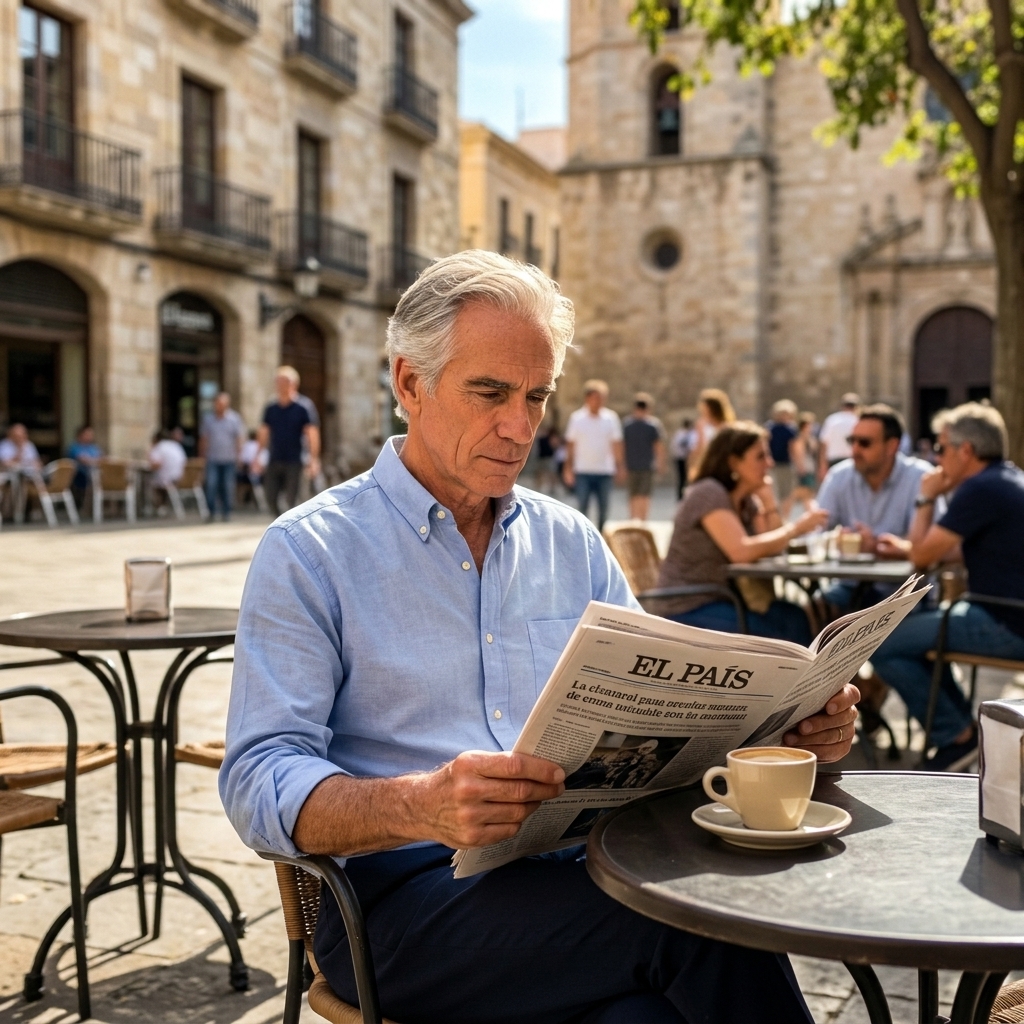
So the headline in an English newspaper could literally say 'party drug approved as medicine' and that reads as mildly provocative, maybe sensationalist.
But if you translated that phrase word for word into Spanish, it would read as something much more alarming.
Exacto.
Exactly.
Por eso en los periódicos españoles este tema aparece con palabras como 'sustancia' o 'compuesto'.
That's why in Spanish newspapers this topic appears with words like 'sustancia' or 'compuesto.' Journalists avoid 'droga' because the reader reacts differently.
Los periodistas evitan 'droga' porque el lector reacciona diferente.
The word changes the conversation.
La palabra cambia la conversación.
Which, when you think about it, might be part of the reason this debate has moved faster in English-speaking countries.
The word itself doesn't carry the same automatic contamination.
Language shapes what's politically thinkable.
I spent thirty years covering politics before I understood that as clearly as you just put it.
Y 'fármaco' es una buena palabra para aprender.
And 'fármaco' is a good word to learn.
Viene del griego 'pharmakon', que significaba tanto veneno como medicina.
It comes from the Greek 'pharmakon,' which meant both poison and medicine.
Así que incluso en la etimología, la idea es la misma: depende de cómo lo usas.
So even in the etymology, the idea is the same: it depends on how you use it.
Pharmakon.
Poison and cure in the same word.
That's almost too perfect for this episode.
New Zealand hands two psychiatrists the thing that was in a locked cabinet for forty years and says: let's find out which one it is.
Eso es exactamente la situación.
That's exactly the situation.
Y creo que en diez años vamos a mirar atrás y pensar que tardamos demasiado.
And I think in ten years we're going to look back and think we took too long.
Los pacientes esperaron décadas por una conversación que los políticos no quisieron tener.
Patients waited decades for a conversation that politicians didn't want to have.